Monday, 9 November 2020

Speaking cards

Hey Guys. What's up . Today we are going to learn an amazing topic. This will help you in your day to day life. You'll learn how to use the verbs in your conversation in English. You'll also acknowledge yourself with some unconditional Sentences at the time of situation where we think, " Ummm! what should I speak"...πŸ€”πŸ€”πŸ€”.

So let's begin πŸ€“πŸ€“

πŸ‘‰Our First topic is about Wh questions:
These are Wh- questions and yes/no questions. Wh- questions, also known as 'open questions', are question words that begin with Wh (with the exception of 'how').
πŸ‘‰Moving forward we have Comparitives , A Comparative Adjective is a word that describes a noun by comparing it to another noun. Comparative adjectives typically end in 'er' and are followed by the word 'than'.

πŸ‘‰Next we have in our discussion is There is, There are... The choice between the phrases there is and there are at the beginning of a sentence is determined by the noun that follows it. Use there is when the noun is singular (“There is a cat”). Use there are when the noun is plural (“There are two cats”).

πŸ‘‰Moving forward we have Have / Has got..
Have got” is a two-part verb, and “have” (or “has” for he / she / it) acts as the auxiliary. ...We use has got in the 3rd person singular (he,she, it), and we use have got with all other persons.
πŸ‘‰Next is The present perfect, It is used to indicate a link between the present and the past. The time of the action is before now but not specified, and we are often more interested in the result than in the action itself.
πŸ‘‰We'll end our topic with Past Simple, The simple past tense of regular verbs is marked by the ending -d or -ed. ...
So Hope now you'll not feel any difficulty in Conversing in English. To Learn more topics like these, nothing you have to do just open Learning network and you can fill yourself with knowledge.
Thanks 😊

Friday, 6 November 2020

What are Adjectives?


Welcome guys to our team . Let's learn a new topic today. What are Adjectives? 🧐🧐


Adjectives that describe the qualities or states of being of nouns.
⭐ For example
πŸ‘‰Margot wore a beautiful hat to the pie-eating contest.
πŸ‘‰My cake should have sixteen candles.
πŸ‘‰The scariest villain of all time is Darth Vader.

In the sentences above, the adjectives are easy to spot because they come immediately before the nouns they modify.

But adjectives can do more than just modify nouns. They can also act as a complement to linking verbs or the verb to be. A linking verb is a verb like to feel, to seem, or to taste that describes a state of being or a sensory experience.

Uses of adjectives
Adjectives tell the reader how much—or how many—of something you’re talking about, which thing you want passed to you, or which kind of something you want.

Please use three white flowers in the arrangement.

Degrees of comparison
Adjectives come in three forms: absolute, comparative, and superlative. Absolute adjectives describe something in its own right.

1A cool guy.
2A messy desk.
3A mischievous cat.
4Garrulous squirrels.

Comparative adjectives, unsurprisingly, make a comparison between two or more things. For most one-syllable adjectives, the comparative is formed by adding the suffix -er (or just -r if the adjective already ends with an e). For two-syllable adjectives ending in -y, replace -y with -ier. For multi-syllable adjectives, add the word more.

Superlative adjectives indicate that something has the highest degree of the quality in question. One-syllable adjectives become superlatives by adding the suffix -est (or just -st for adjectives that already end in e).


It's time to Practice now πŸ€“πŸ€“πŸ€“

Verbs

A verb is a word which indicates an action, event or state.

For example:

πŸ‘‰She ironed her dress.
πŸ‘‰He drove to the mountains.
It puts the subject of the sentence into motion and provides further information to help clarify the subject.
However, to add another layer, verbs also describe a state of being, such as:

πŸ‘‰She feels tired.
πŸ‘‰He prefers coffee.

Kinds Of Verbs:
Main Verb
The main verb is also called the lexical verb or the principal verb. This term refers to the important verb in the sentence, the one that typically shows the action or state of being of the subject. 

For example: eat , drink, sleep, study, laugh etc. 


Auxillary Verb : ( Helping Verb) 
Look at the following principle auxillary, be, do and have.
Be: is , am , are, was , were
Do: Do, does, did
Have :. Has, have , had
Auxiliaries are used:
πŸ‘‰ To show whether an action is complete or continuous.
πŸ‘‰ In interrogative and emphatic statements
πŸ‘‰In short answers to avoid repetition of words.

For example: 
πŸ‘‰He is dead.
πŸ‘‰Do you like to read? Yes, I do or No, I don't. 
πŸ‘‰Can you help me lift this box? Yes, I can. 

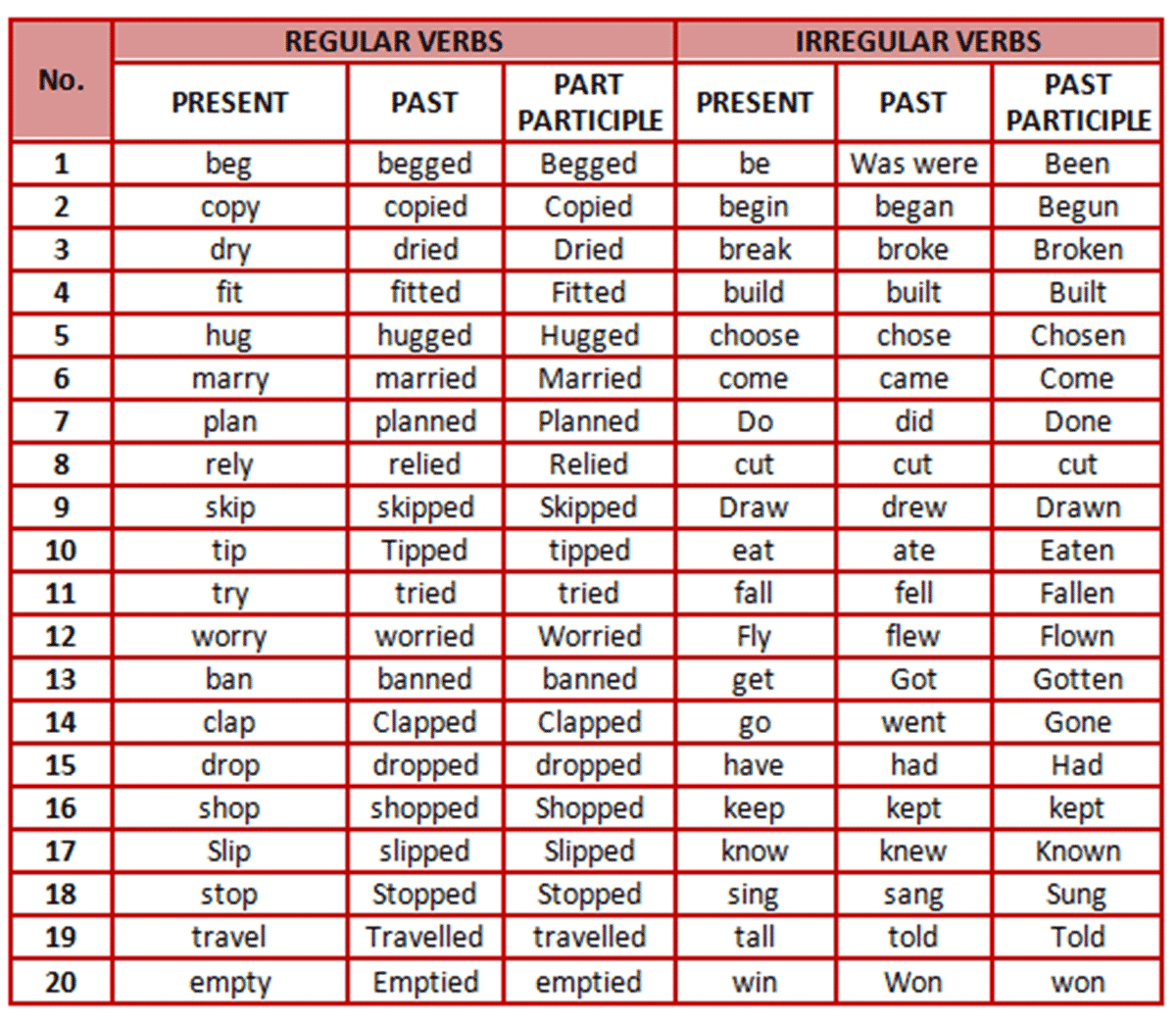
Forms of a Verb:
You can check the forms of verb from below mentioned picture.

Practice the verbs through the exercise.

Read , Understand and Practice

Wednesday, 4 November 2020

What are Pronouns?

What are Pronouns?

A pronoun is used to avoid the repetition of a noun or noun phrases.
For example:
1. Ravi arrived late. He had high fever.
2. I wrote to my sister Ekta what she should do.
In these sentences he ,I and she are Pronouns.
He is used for Ravi ,She is used for Ekta. 

πŸ‘‰ Kinds of Pronouns:

πŸ’ Personal Pronouns :

Pronouns that are used for persons are things are called Personal Pronouns. For example: I ,we, you, he ,she, it ,they, him, her, us, them, etc.

πŸ’ Relative Pronouns:

Relative Pronouns are those Pronouns which relate to nouns which have gone before. For example: who ,which ,that, what ,whoever, whatever , whom.

πŸ’ Interrogative Pronouns :

Interrogative Pronouns are those Pronouns which ask some questions For Example: who, which, what, when.

πŸ’ Demonstrative Pronouns: 


These are those Pronouns which point out the object or objects for which they are used. For example: This, That ,These, Those.

πŸ’ Reflexive Pronouns :


Reflexive Pronouns are those pronouns which refer to the action returning to the doer. For example: myself, ourselves, yourself, himself ,herself, itself, themselves.


πŸ’ Emphasising Pronouns:


Emphasising Pronouns are the Pronouns which lay emphasis. For example myself ourselves etc.

πŸ’  Possessive Pronouns:


Possessive pronouns show that something belongs to someone. The possessive pronouns are my, our, your, his, her, its, and their. There's also an “independent” form of each of these pronouns: mine, ours, yours, his, hers, its, and theirs.

πŸ’  Indefinite Pronouns:

 Indefinite pronouns do not refer to a specific person, place, or thing. In English, there is a particular group of indefinite pronouns formed with a quantifier or distributive preceeded by any, some, every and no.

Sunday, 1 November 2020

What are Nouns??

 NOUNS

A noun tells us what someone or something is called .It is the name of a person ,a place ,a thing ,a creature ,a quality ,an action or a state of being.

Kinds of Nouns 

Nouns are of five kinds 
1. Proper Nouns : Narinder Modi , Patiala , the Ganga , Taj Mahal etc.
2 Common Nouns : River, city ,man ,students ,park ,statue etc .
3Collective Nouns: flock, fleet ,class, battalion, crowd etc.
4 Abstract Nouns: kindness, sickness, happiness, anger etc.
5 Material Nouns :silver, steel, cotton, iron etc.

All common nouns fall into two classes:

Countable and Uncountable nouns
1. Nouns that can be counted are called countable nouns.

A Bird         one bird        three birds
An apple      one apple      five apples


2.Nouns that cannot be counted are called Uncountable Nouns.
   Water, milk soup, oil, rice, sugar,butter,education etc...
If the noun is uncountable we use some, a little. Many nouns have both countable and uncountable uses; for example, soda is countable in "give me three sodas", but uncountable in "he likes soda".

Abstract Noun:

Abstract nouns are a type of noun that you can't see or touch. A noun is a person, place or thing. ... An abstract noun may include an aspect, concept, idea, experience, state of being, trait, quality, feeling, or other entity that can't be experienced with the five senses.


Collective Noun:

It denotes the number of persons or things grouped together as one complete whole: crowd, flock etc.


Material Nouns

The substance or substances of which a thing is made or composed: Stone is a durable material. ... materials, the articles or apparatus needed to make or do something: writing materials.


Friday, 30 October 2020

What are Vowels?

Hello everyone, Let's learn an another topic today. The topic for today is what are Vowels??

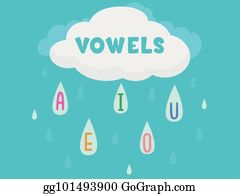
The definition of a vowel is a letter representing a speech sound made with the vocal tract open, specifically the letters A, E, I, O, U. The letter "A" is an example of a vowel.

The other letters in the alphabet are called consonants.

The words abstemious and facetious contain all five vowels in order.

A vowel sound (but not necessarily a vowel in the actual spelling) will be present in a syllable.


Example of vowel are listed in the following picture:
πŸ‘‰Is Y a Vowel?

So, is Y a vowel? Sometimes it is, and sometimes it isn't, which is why it is often called a semi-vowel.


KEY POINTS 🧠
*Use "an" if the next word starts with a vowel sound.

*Use assonance (repetition of the same vowel sound in nearby words) to compel your readers to think more deeply about your word choice.


What is a Consonant??

⏭️What are Consonants?

Hey Guys ! Today we are going to learn another super cool , super awesome topic of English Grammar i.e, Consonants. 

➡️Consonant: A sound we make that is not a vowel is called consonant. The breath is somehow blocked on its way out of the mouth. The English letters b,c , d, f, g, h, k, l, m, n, p, q, r ,s, t, v, x, z and usually w and y are called Consonants.


There are 24 consonant sounds in English divided into two types of consonant sounds:

Voiceless sounds- Voiceless consonants do not use the vocal cords to produce their hard, percussive sounds.There are 9 voiceless sounds

Voiced sounds As you pronounce a letter, feel the vibration of your vocal cords. If you feel a vibration the consonant is a voiced one. These are the voiced consonants. There are15 voiced sounds.

Hence, Consonants -> 21 letter-> 24 sounds

Every voiceless sound has a similar voiced sounds. 


English consonant letters: B, C, D, F, G, H, J, K, L, M, N, P, Q, R, S, T, U, V, W, X, Y (sometimes), Z

Consonant Examples in Words:

➡️car
“c” and “r” are consonants in this word
➡️storm
“s” “t” “r” “m” are consonants in this word
➡️day
“d” and "y" are consonant in this word


Thursday, 29 October 2020

What is a Sentence??

A Sentence is a combination of words which give a complete meaning. There are various types of sentences depending on their structure and function.

Sentence is a set of words that contain
1. Subject
2. Predicate

Note that the predicate always contains a verb. Sometimes, in fact, the predicate is only a verb.

So we can say that a sentence must contain at least a subject and verb.

Note: A sentence always begin with a capital letter and ends with either full stop (.) or exclamation (!) or question mark(?).

Let's check the following examples:
1. The snake moves and hide behind the bushes.
2. What a delicious food!
3. Have you paid the school fees?

KINDS OF SENTENCES

There are Four kinds of sentences:
1. Assertive or Declarative Sentence:
✓ A sentence that makes a statement or assertion is called an assertive or declarative sentence.
For example, 
➡️ India is in Asia.
➡️ She can never cheat anybody.

✓ An assertive sentence can be affirmative (Positive), see sentence 1 or negative, see sentence 2.

✓ All assertive sentences end with stop.

2. Interrogative Sentences:
✓ A sentence that ask a question or makes an enquiry is called Interrogative sentence.
For example,
➡️ Can you relate the whole incident?
➡️ Who is that lady?

✓ Some questions are Yes/ No questions
✓ Some are Wh... questions
✓ A question mark (❓)
 is put at the end of an interrogative sentence.

3. Imperative Sentence:

✓ A sentence that expresses an advice, an order, a command, a forbidding or an entreaty is called an imperative sentence.

For example,
➡️ Avoid Fast food.
➡️ Do me a favour, please.
➡️ Take off your shoes.
➡️ Don't pluck flowers.

4. Exclamatory Sentences:

✓ A sentence that expresses a sudden or strong feeling is called exclamatory sentence.

For example,
➡️ Hurrah! India has won the hockey series.
➡️ What a beautiful dress!

✓ A mark of exclamation ( ❗) is put at the end of an exclamatory sentence.


RECOMMENDED LINKS

#https://dictionary.cambridge.org/dictionary/english/sentence

# Daily Writing Tips

# https://en.wikipedia.org/wiki/Sentence_(linguistics)


Punctuation

Punctuation Punctuation  is speaking, where we use pauses, intonation and voice modulation to make our meaning clear...